A World Premiere, a Book about Cinema, Ukrainian Classics and International Guests: Screenings and Events at “Molodist” on 26–27 October
26 October
The audience watched three blocks of short films from the international competition in one day. Among them were such films as “Silence” by Pavlo Shpegun and “Another Day in the Metal Box” by Gleb Feldman, whose film premiered at the Locarno Film Festival 2026. Both directors attended the screenings. The discussion with Gleb Feldman didn’t take place because of the Russian attack; however, Pavlo Shpegun did manage to answer some questions from the audience.
The world premiere of “Silence” took place at the Venice International Film Festival, where the film was awarded the Airone della Laguna Award. For actor Pavlo Shpegun, this marks his directorial debut.
“I always dreamed that my premiere would happen in Mariupol. I was born there, but the Zhovten cinema theater reminds me of my favorite cinema theater in Mariupol, called ‘Peremoga’, in so many ways”, said Pavlo Shpegun. He also mentioned that many dialogues from the movie were inspired by real meetings with soldiers.
You can read the interview with Pavlo Shpegun on the website of the festival’s information partner, NV.ua.
Almost all of the crew members and the protagonists of the documentary film “War Has No Children” attended its world premiere, including the director Dmytro Todoriuk, the assistant director Hanna Yaresko, and the author of the idea, Valeriia Nykyforets. The film was created with the help of the Ukrainian State Film Agency. It is based on real stories about Ukrainian children and their families. The crew talked about challenging work conditions: shooting without sleep, hot water, and heating. At the same time, young protagonists shared their impressions after the screening. Valeriia Nykyforets also said that after the shooting was over, a close relative of one of the protagonists — who’s originally from the Poltava region — returned from the captivity within the prisoners’ exchange.
You can read the interview with Dmytro Todoriuk on the “New Ukrainian Cinema” platform: https://www.cinema.in.ua/u-viiny-ne-maie-buty-ditei-rezhyser-dmytro-todoriuk-pro-dokumentalnyi-debiut-dytynstvo-pid-chas-viiny-ta-sylu-nadii/
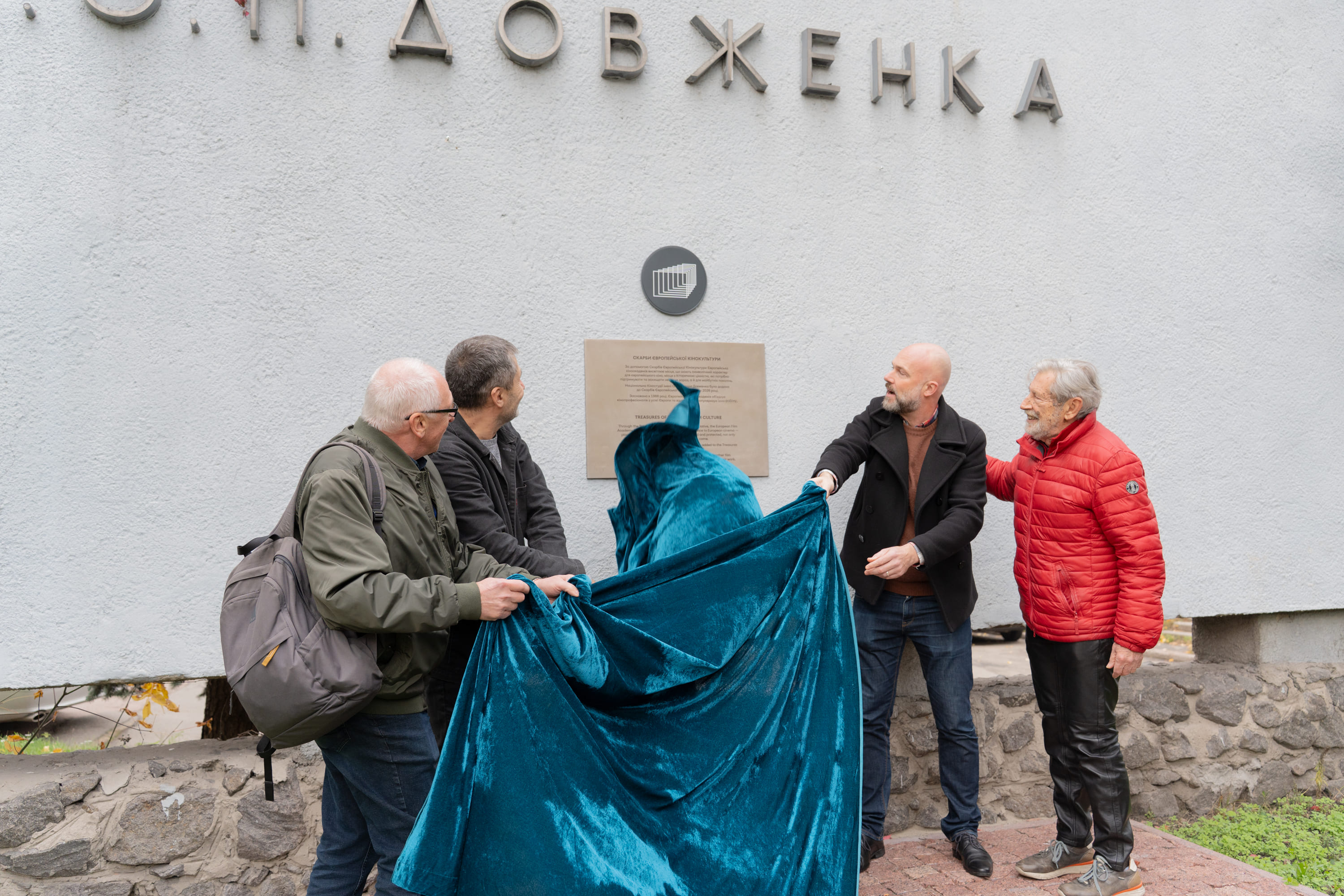
In collaboration with the Dovzhenko Centre, Ukraine’s first screening of a restored copy of the film “A Well for the Thirsty” also took place.
Olena Hocharuk — creative director of the Dovzhenko Centre — said that it’s hard to track down, based on archival documents, where the film copies are stored and what happened to the original negative, which is very likely to be in Moscow. To restore the film, the specialists gathered all the information about it and its copies; they were also joined by film experts, archivists, and conservators.
The restoration began with scanning the film with the equipment brought to Kyiv by Polish colleagues to protect Ukrainian cinema heritage. Then they scanned around 13 films, including “A Well for the Thirst”. Curator Daniel Bird also joined the project after recognizing the film’s potential. The restoration was funded by the Polish Film Institute, and, according to Ms. Honcharuk, the restoration process was carried out by Fixafilm specialists and Łukasz Czeranka, who also works with the Cineteca di Bologna. This very team also worked on the restoration of Serhii Paradjanov’s films “Kyiv Frescoes” and “Shadows of Forgotten Ancestors”.
Pylyp Illienko — producer, director, and Yurii Illienko’s son — brought a family relic — a collage made by his father after the first screening of “A Well for the Thirsty” at the film festival in Munich and after his son Andrii was born. Both events happened on 24 June 1987. When Yurii Illienko was invited to present the film, Klaus Eder, programme director of the festival, read a telegram which said that his son Andrii was born in Kyiv. Mr. Eder made a joke that the director’s two sons — the film and Andrii — were born that day.
“I still have the original telegram. Father joined it with his photo from Munich and my mom’s photo, and made a collage as a keepsake. We kept it at home for several decades, but now it’s at my brother’s place. I borrowed it for today’s screening”.
At the Budynok Kino, a national premiere of the film “Vesna” took place. Rostyslav Kyrpychenko, the Lithuanian director of Ukrainian origin, travelled there specially for the screening.
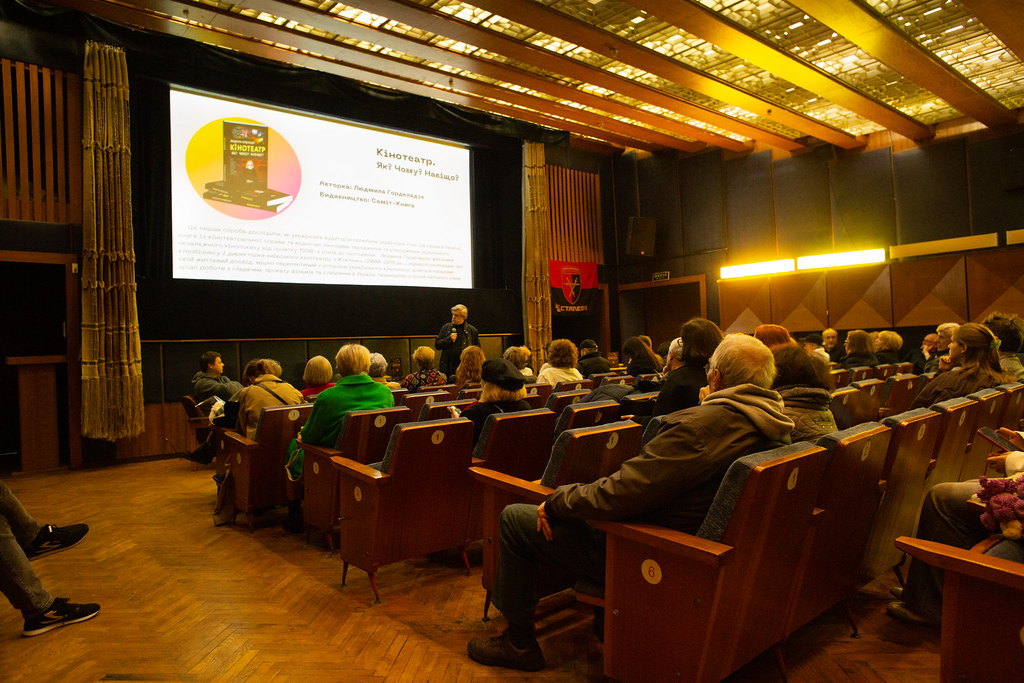
Within the industry section, there was a discussion, “Cinema on the Pages: Why Write About Cinema?”, and a presentation of the book “CINEMA THEATRE. How? Why? For What Reasons?” by Liudmyla Gordeladze. The author — director of the Zhovten cinema theatre from 2000 to 2018 — one of the most respected Ukrainian cinema experts, a member of expert committees of the State Film Agency, the Ministry of Culture, and the Council for State Support of Cinematography from 2019 to 2021 — presented the publication in person.
The discussion was joined by Yurii Samusenko, Ukrainian film critic, journalist, editor, archival producer, and the author of the book “How to Watch That: Ukrainian Cinema of the Independence”; Ivan Malkovych, Ukrainian poet and publisher, founder and chief editor of the publishing house “A-ba-ba-ha-la-ma-ha”; and Volodymyr Voitenko, cinema expert, founder and editor of such projects as “Kino-Kolo” and “Screenplay workshop”. The discussion was moderated by Serhii Trymbach — Deputy Head of the National Union of Cinematographers, film critic, film expert, and screenplay author.
27 October
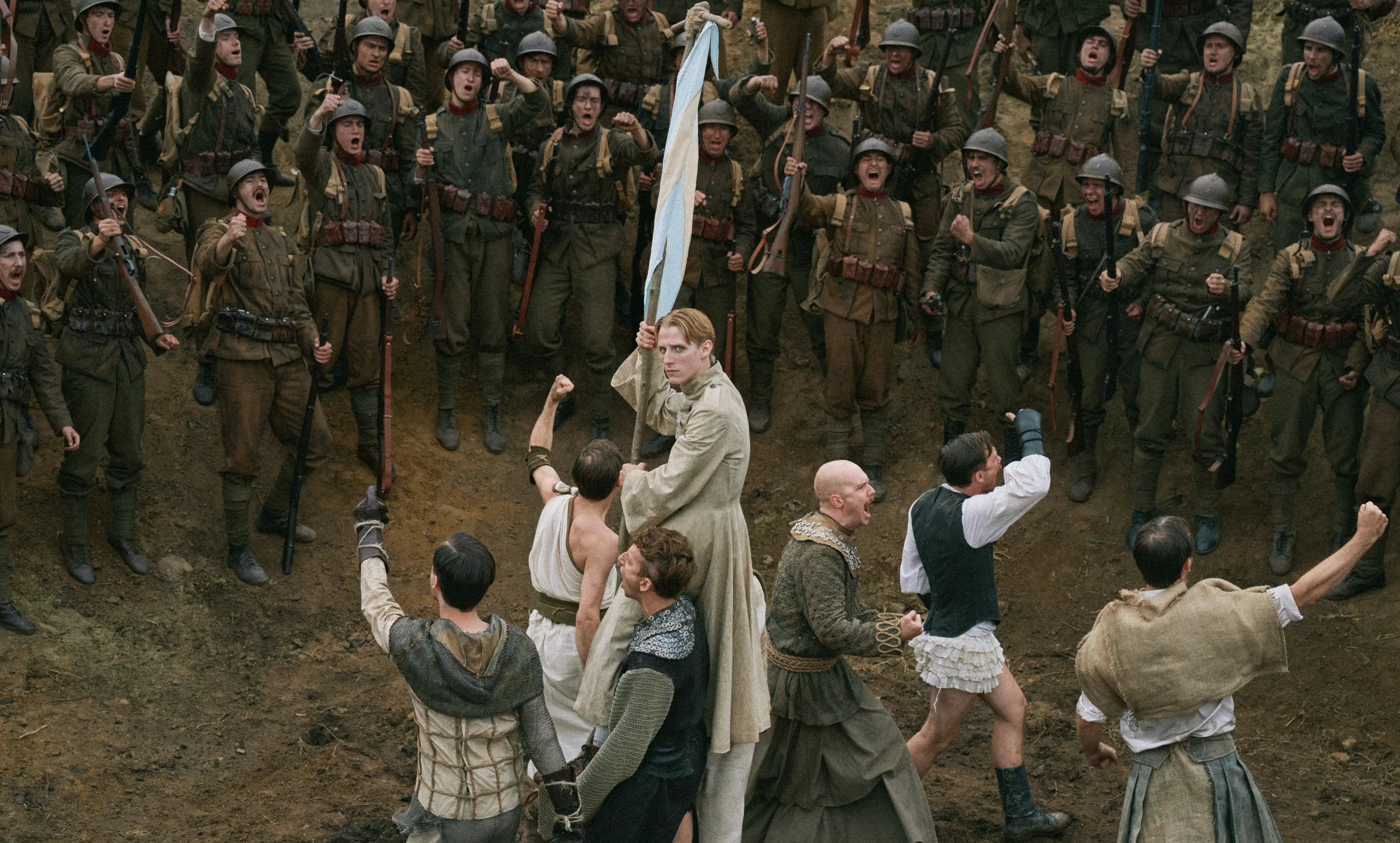
The first screening of the feature film “Camouflage” took place within the international competition. Mykyta Hibalenko’s film was presented by the composer Mykyta Moisieiev, actress Anna Yaremchuk-Bobalo, and consultant Jan Švankmajer — a member of the German crew.
Mykyta Moisieiev talked the work on the music for the film:
“The director, Mykyta Hibalenko, is a person of great depth who carefully weighs up and thinks through his decisions. The soundtrack became an interpretation of Aristophanes’ ‘The Birds’, an Ancient Greek comedy. We wanted to rhyme the film with it in some way and considered what instruments to use for my contribution as a composer. We then decided that wind instruments would suit best because these are the instruments that were likely to be used in Ancient Greek comedies. As you can hear, most of the music is played by one person, the bass clarinet soloist Artem Shestovskyi. In the studio, I made him make various sounds, even though he had no idea what would come out of this. He ended up being very tired; however, I got a broad set of samples from which I then composed the music.”
National Competition
On 27 October, the first block of the national competition was screened. The following films were shown: “Homecoming” by Roman Khimei and Yarema Malashchuk (European Film Awards’ short list), “Glass Castles” by Herman Serzhanov, “High Frequency” by Andrii Kokura, “Fig” by Novruz Hikmet, “Where’s the Ukrainians’ House?” by Daria Holosko, and “In her arms” by Roman Volosevych. Viktor Hlon traditionally oversees the programme for the national competition. He wasn’t able to attend the screenings as he’s currently serving in the Defence Forces of Ukraine. The discussions were moderated by the film expert at the Dovzhenko Centre, Stanislav Bytiutskyi.
Roman Volosevych talked about “In Her Arms”:
“While working on the screenplay, we decided not to show our protagonists’ faces. It’s an important decision: it shifts the focus of the story from the couple’s relationship to a more symbolic level. We knew we needed a somewhat more detached approach, because the relationship structure itself doesn’t have any specifics. The film can hardly be called realistic, both in terms of the visual style and its mise-en-scène.”
Daria Holosko on the film “Where’s the Ukrainians’ House?”:
“I really wanted to find a Ukrainian family and create its portrait, but unfortunately, I couldn’t do that. So, my camerawoman and I found a way to tell our own story without a protagonist in the frame. It was easy and natural. The film came about in one week, then went on to take on a life of its own.”
Herman Serzhanov talked about “Glass Castles”:
“I always wanted to show a family life on screen, but I got a final push from my own family, who hardly spoke to one another. I wanted to unite them at least for the time being. It seems like each member of my family builds walls around themselves. They are very fragile and crumble when we grow closer. If everyone stopped hiding behind their own barricades, we would see that, in reality, we are all very fragile.”
Novruz Hikmet on film “Fig”:
“Some parts of the film happened to be shot back in 2016. A few years later, while I was reviewing the footage, I felt nostalgic about the places that don’t exist anymore. It was important for me to capture the reality that existed just a few years ago, in particular the Baku coastline. I resumed working on the film in 2023. Now, I reminisce about the shooting as a nice journey, because I shot places where I grew up and liked to spend time at.”
Within the industry section, the presentation of the “ENGINE” Association took place. Alik Shpyliuk announced that the National Union of Cinematographers had supported the establishment of this youth arts association. “ENGINE” aims to unite students’ creative initiatives from various higher education institutions across Ukraine.
“ENGINE” is an interdisciplinary platform for students majoring in creative disciplines: filmmakers, artists, writers, composers, actors, photographers, designers, and culture scholars. This is a space for experiments, collaboration, and artistic self-fulfillment, where different art practices meet, new ideas are born, and joint projects are shaped.
As part of the event, 12 short films from the “Genres.Academia” program by Dmytro Tomashpolskyi’s “Centaurs Studio” were screened.
The festival takes place with the support of the Ministry of Culture, the Ukrainian State Film Agency, and the State Agency of Ukraine for Arts and Artistic Education.
Embassies and government institutions
Embassy of the Italian Republic in Ukraine
Italian Cultural Institute in Ukraine
Goethe-Institut in Ukraine
Embassy of Spain in Ukraine
Embassy of France in Ukraine
French Institute in Ukraine
Embassy of Belgium in Ukraine
Embassy of Spain in Ukraine
Embassy of Poland in Ukraine
Polish Institute in Ukraine
Embassy of the Czech Republic in Ukraine
Embassy of Mexico in Ukraine
Embassy of Argentina in Ukraine
German Films
Creative Europe Desk Ukraine
Sponsors and partners
M.S.L., operator of the Loto-Zabava state lottery
Main media partner: 1+1 media
Kyivstar TV film and television platform
Creative partner: McCANN Kyiv
“ILTA” automotive center in Pechersk
“Musafir,” a Crimean Tatar restaurant bringing a taste of Crimea to the capital
The festival hotel partners: Radisson Blu Hotel, Kyiv Podil, City Centre
The House of Cinema
Cinecitta Restaurant
The House of Cinema
Cinecitta Cafe, Bar & Restaurant\
Media partners
Suspilne
Suspilne Culture
hromadske
#ProShoKino
TyKyiv
Evening Kyiv